1
2
3
4
5
6
7
8
9
10
11
12
13
14
15
16
17
18
LaRayia Gaston
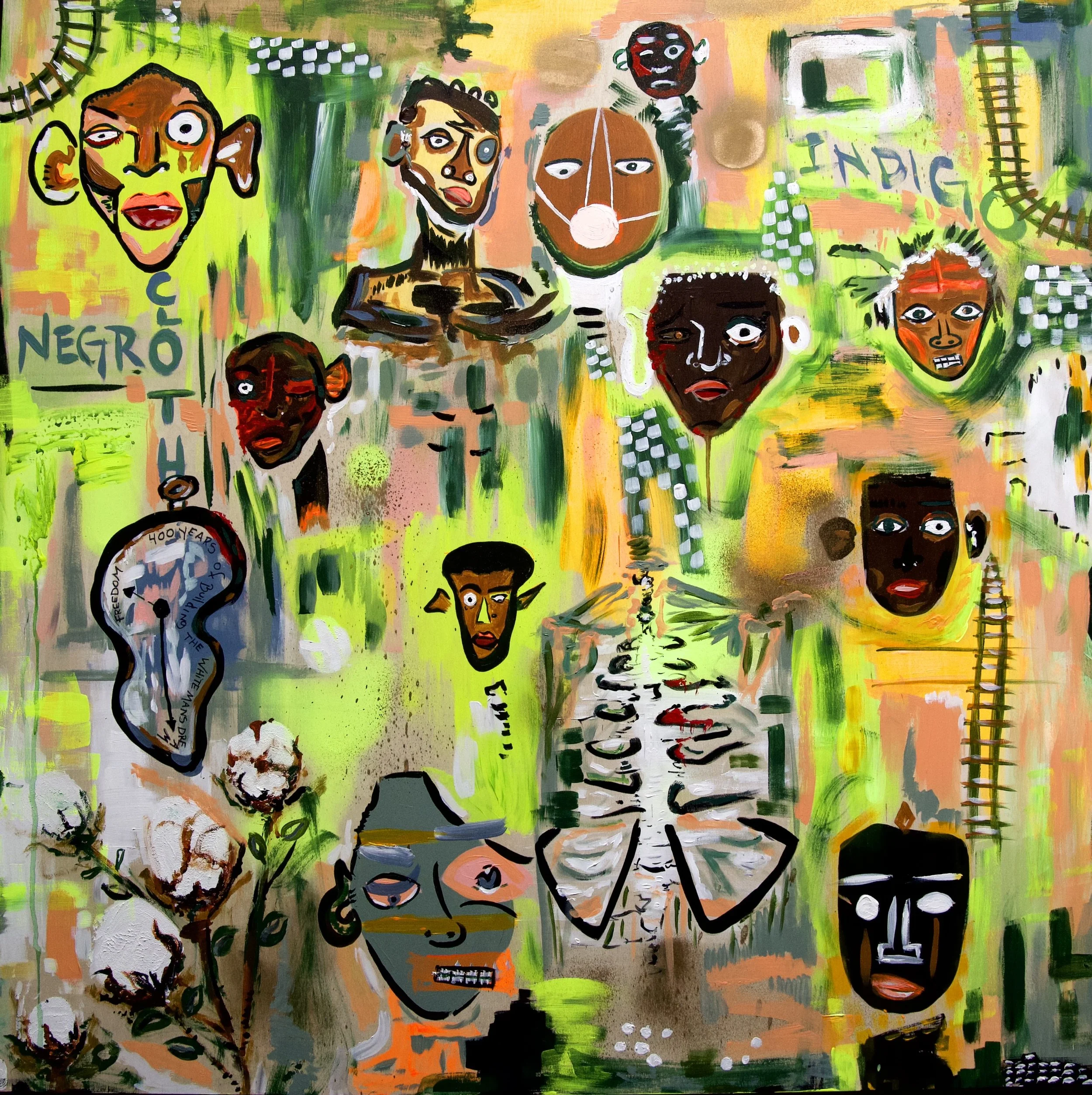
Sons of Indigo
Faces, a ribcage and cotton bolls drift across fields of acid green and gold. The title invokes indigo, the cash crop grown by enslaved hands across the Carolinas and the Caribbean. The canvas is crowded with the descendants that economy tried to make anonymous. It refuses a single focal point; every face demands to be seen. From the series The Rebirth of the Black Renaissance, LaRayia Gaston.
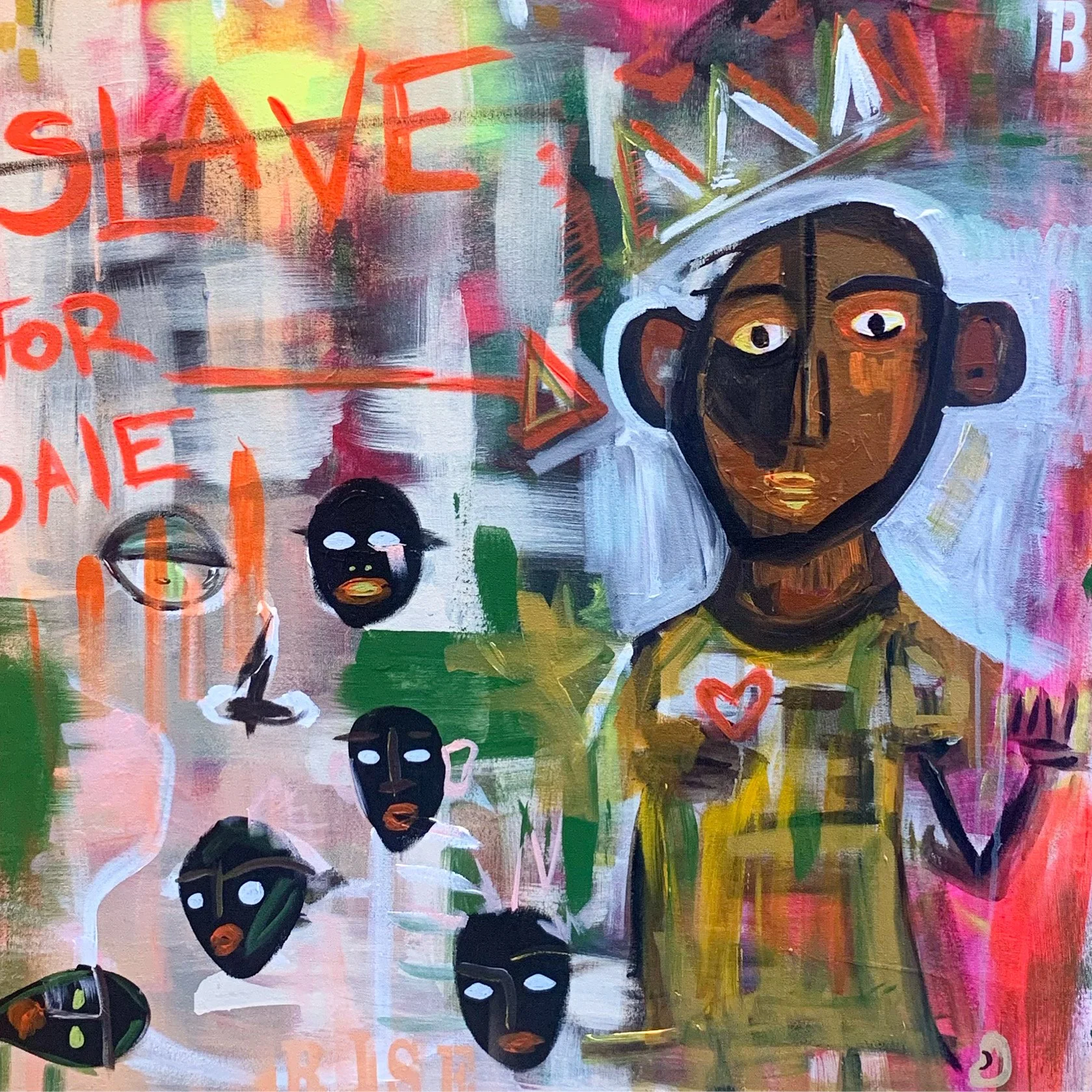
Stolen King
"SLAVE FOR SALE" bleeds across the left of the canvas. At right stands a crowned figure, set apart from a column of floating masks. Gaston stages the collision between sovereignty and the auction block: the crown persists even as the body is priced. From the series The Rebirth of the Black Renaissance, LaRayia Gaston.
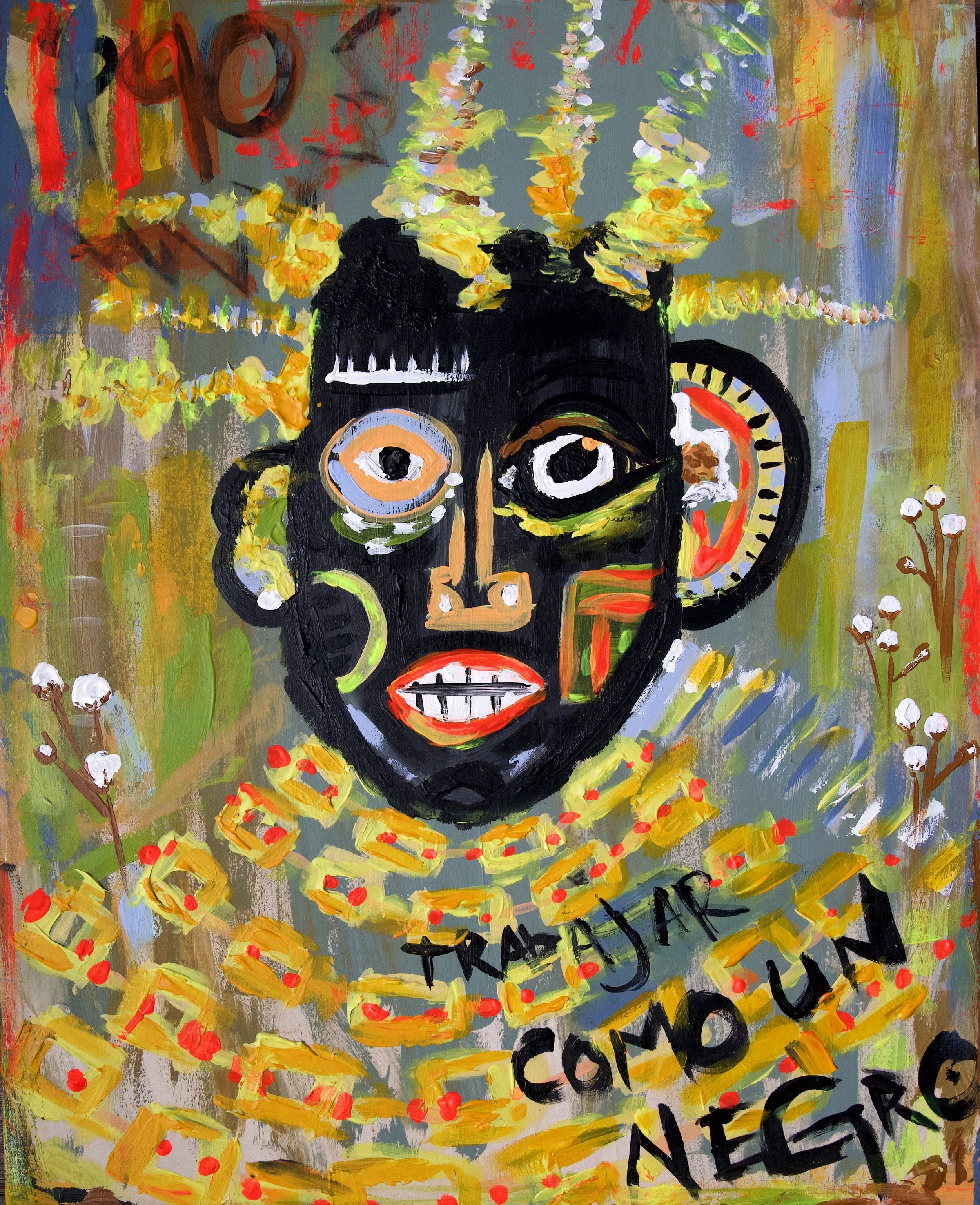
Trabajar como un Negro
The title quotes a Spanish idiom, "to work like a Black person," still used across Latin America and Spain to mean grueling labor. Gaston answers it with a grinning, fractured mask over a field of gold forms and cotton, turning the phrase back on the economy that coined it. From the series The Rebirth of the Black Renaissance, LaRayia Gaston.
Captive Cargo
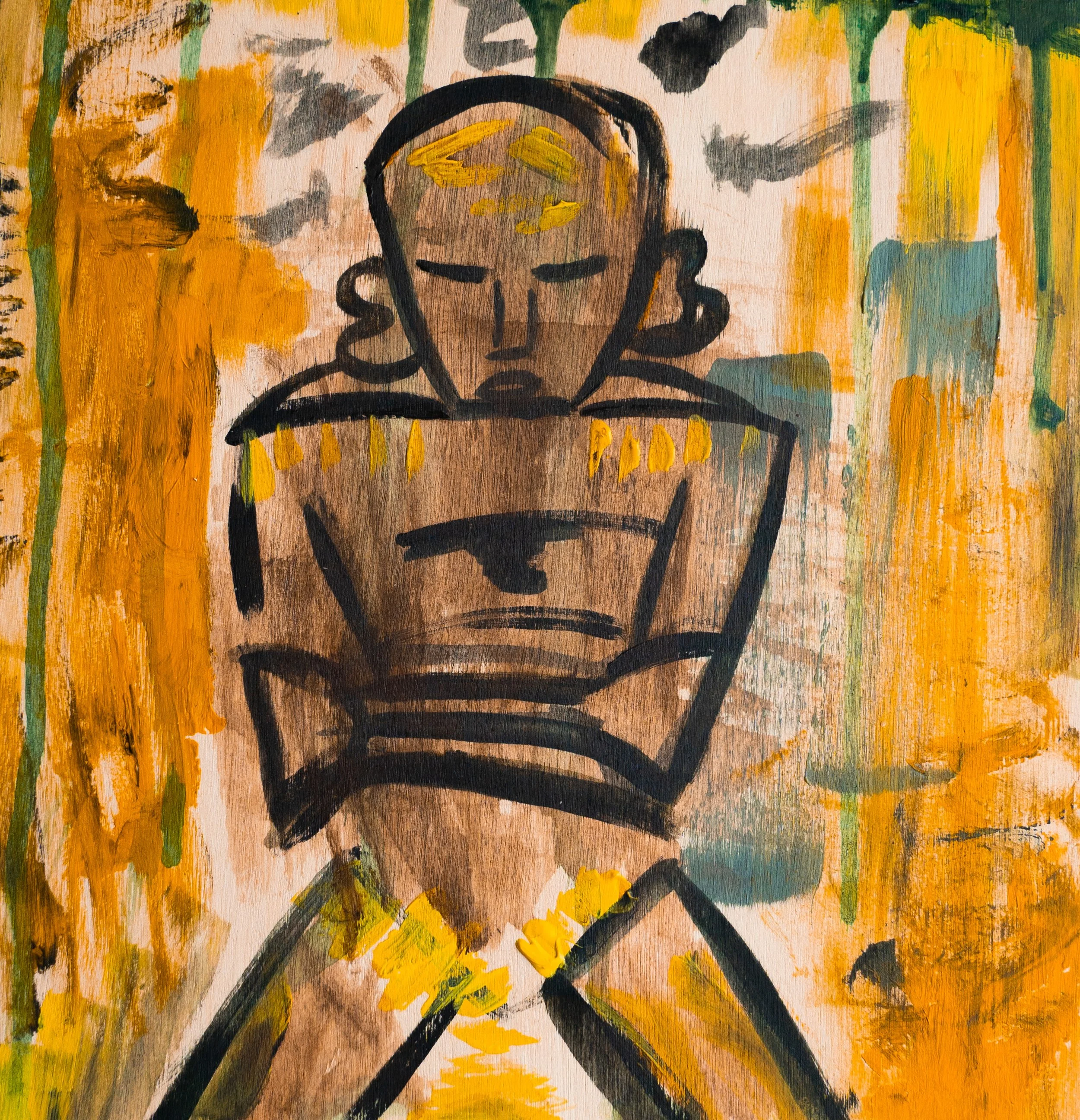
Rendered in ochre, umber and black, a single figure sits bound, arms folded and legs drawn in, compressed into the geometry of a ship's hold. Drips and scraped passages unsettle the surface. The near-sculptural outline recalls how the Middle Passage reduced human beings to tonnage. From the series The Rebirth of the Black Renaissance, LaRayia Gaston.
Highest Bidder
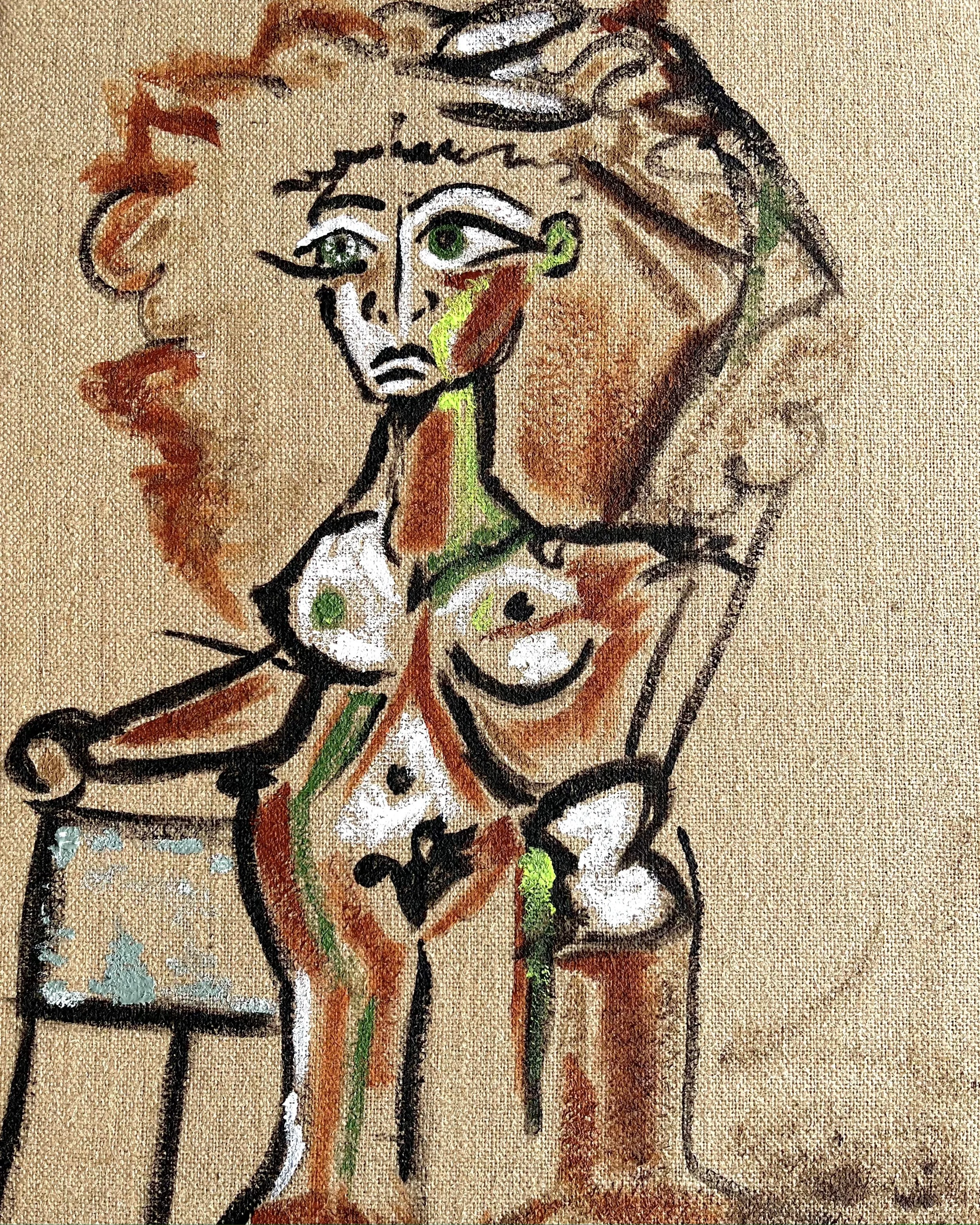
Drawn in sparse, gestural line on raw linen, a seated woman is posed for inspection. Her body is exposed and her gaze is level with ours. The bare ground heightens her vulnerability, while her steady eyes return the look and implicate the viewer in the auction's economy of looking. From the series The Rebirth of the Black Renaissance, LaRayia Gaston.
Better Days Yonder
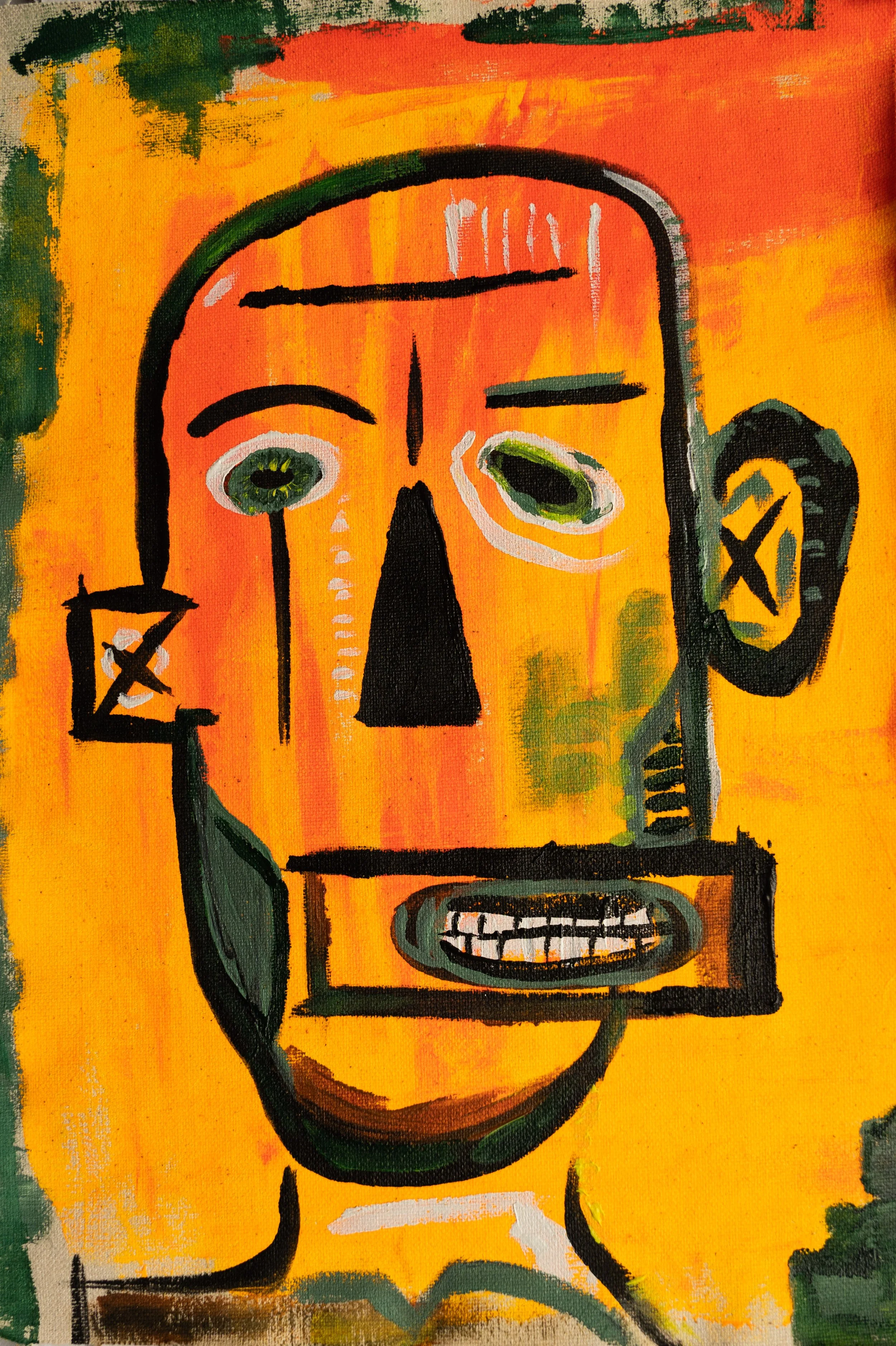
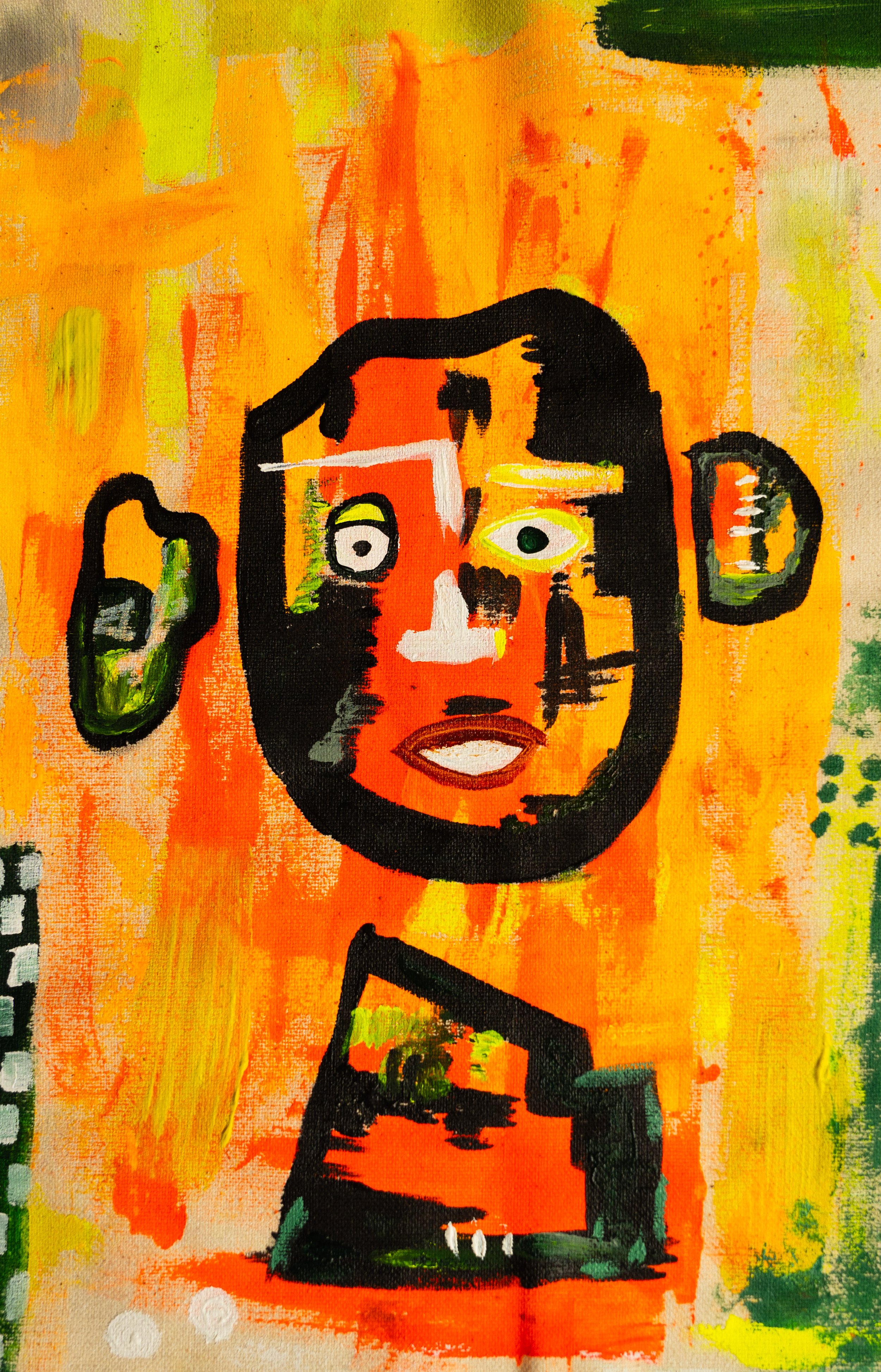
A masklike face burns against saturated orange. Its eyes are heavy and its teeth are boxed in a rectangular frame. The figure carries the strain of the present, while the title, echoing the language of the spiritual, looks past it. Endurance as an act of faith. From the series The Rebirth of the Black Renaissance, LaRayia Gaston.
Cattle Call
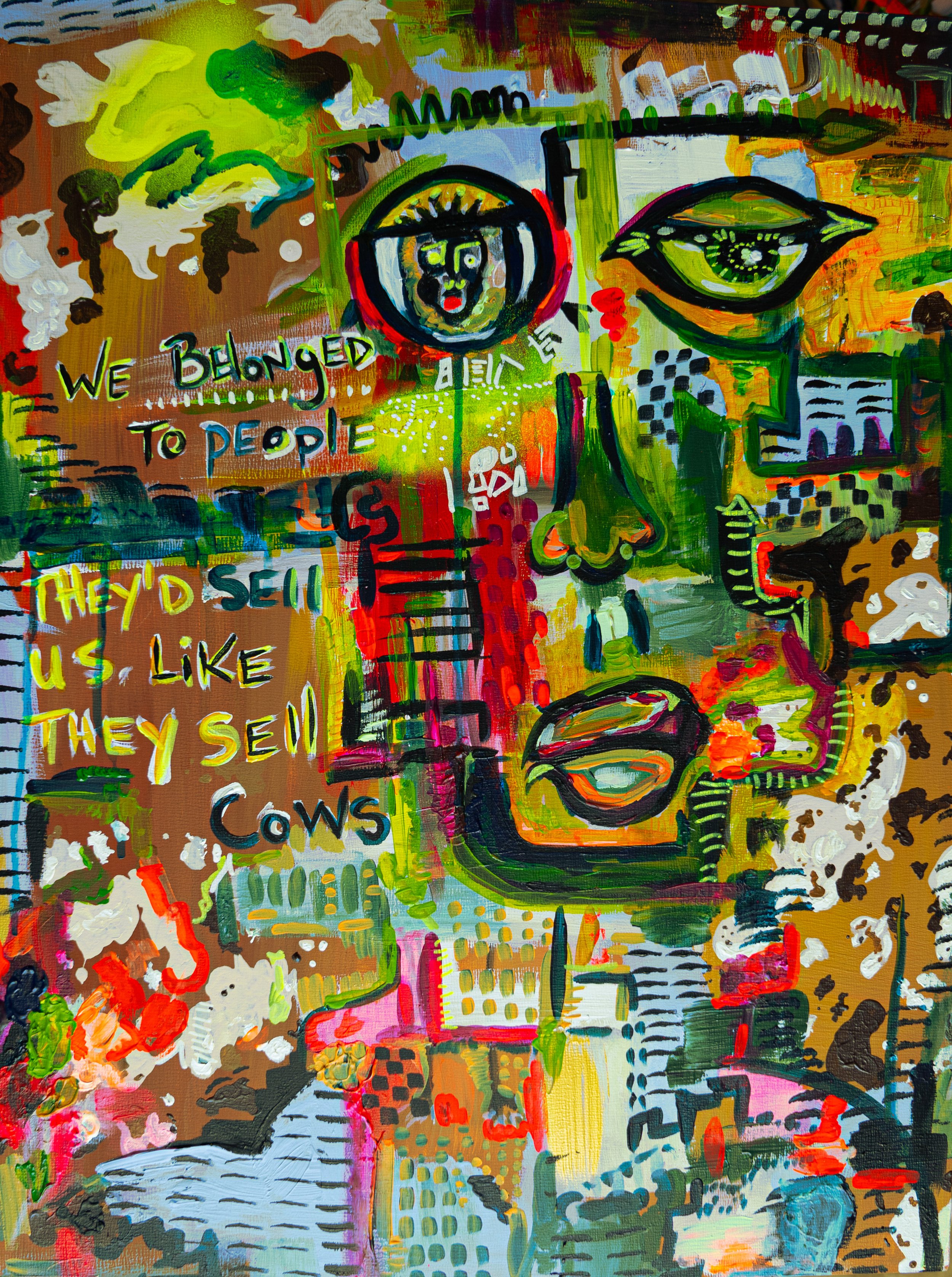
Handwritten testimony anchors the canvas: "We belonged to people. They'd sell us like they sell cows." Around it, eyes, mouths and architectural fragments collide in a dense, all-over field. Gaston sets the language once used for livestock, and once applied to people, in plain sight. From the series The Rebirth of the Black Renaissance, LaRayia Gaston.
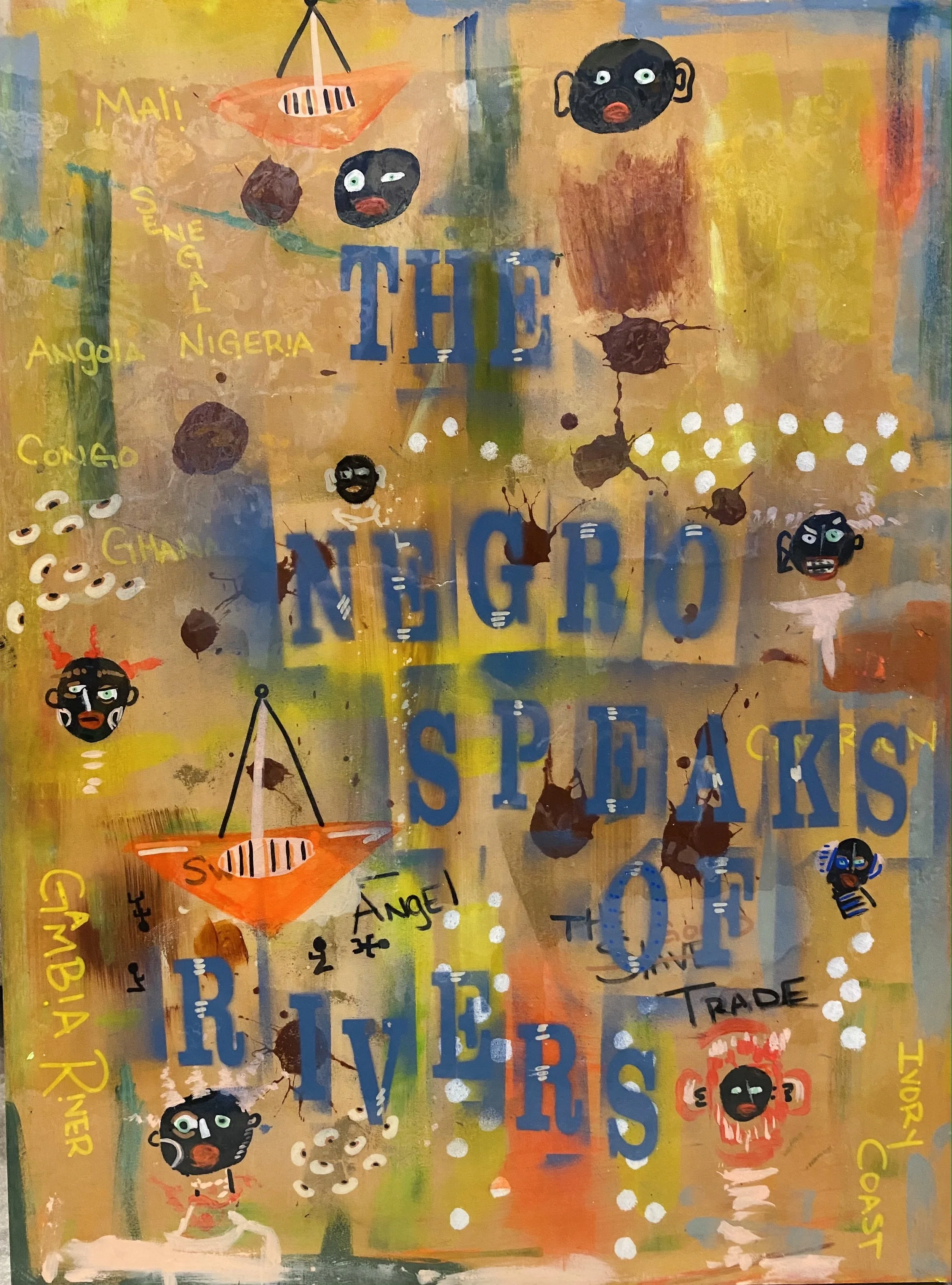
The Negro Speaks of Rivers
The title comes from Langston Hughes' 1921 poem. Stenciled lettering is layered over gold and ochre, scattered with small dark faces, suspended forms and the word "trade." Gaston maps Hughes' rivers onto the routes that carried people as goods. From the series The Rebirth of the Black Renaissance, LaRayia Gaston.
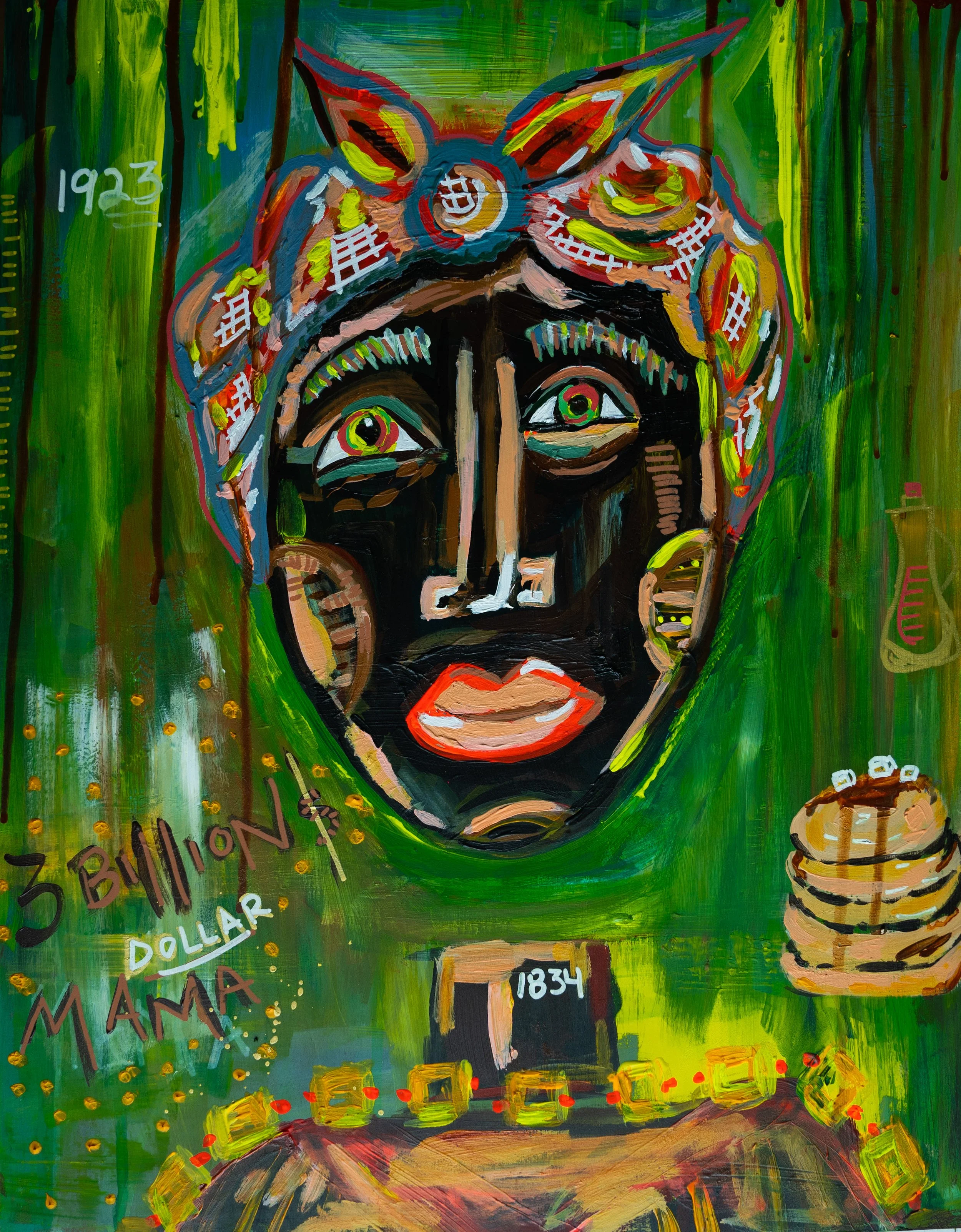
Billion Dolla Mama
A frontal matriarch in a patterned headwrap commands a field of deep green. Inscribed dates and a stack of pancakes surround her, pointing to the commodified image of the Black mother in American advertising. Gaston restores her monumentality. From the series The Rebirth of the Black Renaissance, LaRayia Gaston.
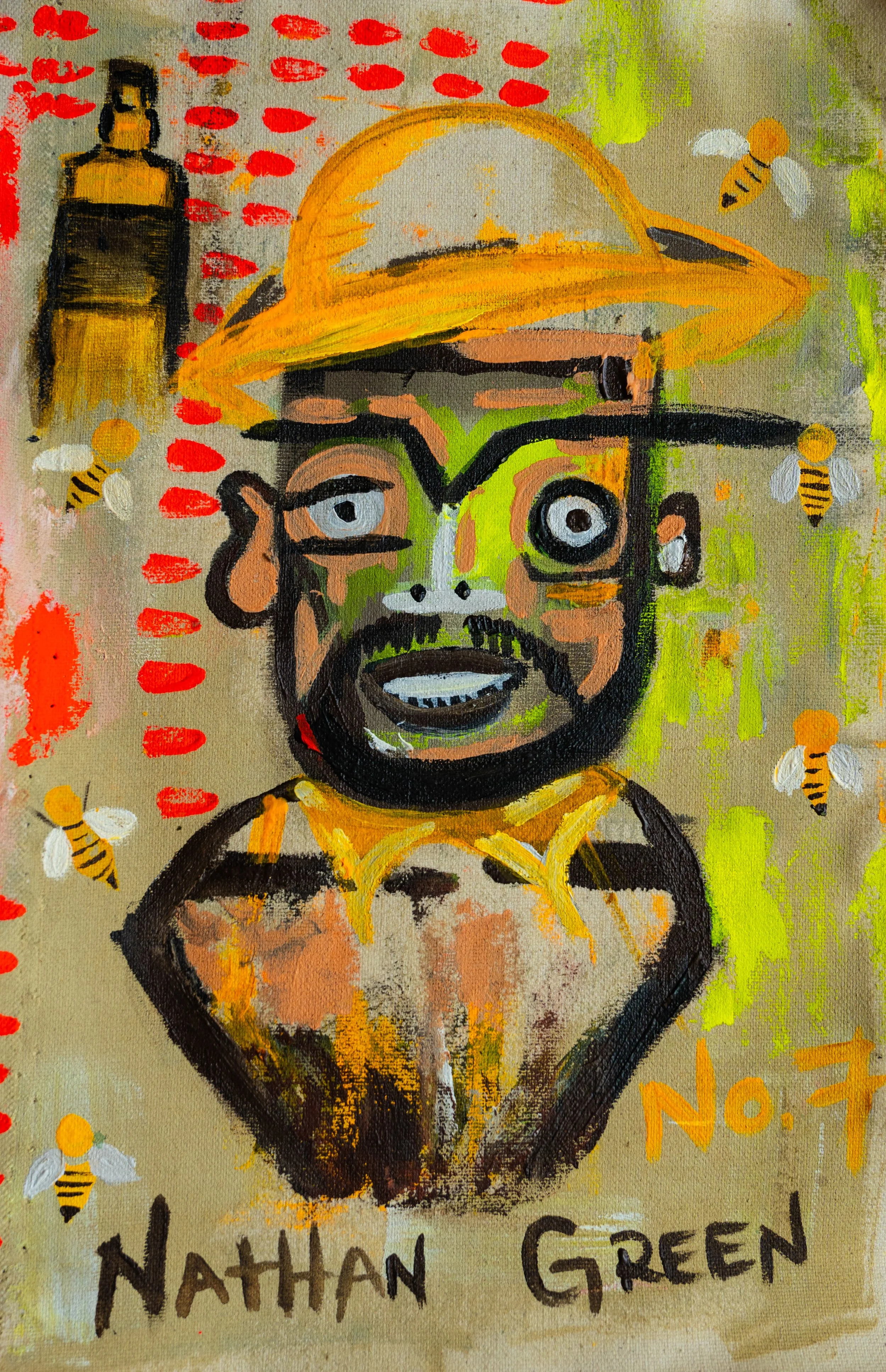
Nathan Green
A portrait of Nathan "Nearest" Green, the formerly enslaved master distiller who taught Jack Daniel to make whiskey. His role was left out of the brand's story for more than a century. Bees, a bottle and "No. 7" circle the sitter. Gaston gives him the face and name history withheld. From the series The Rebirth of the Black Renaissance, LaRayia Gaston.
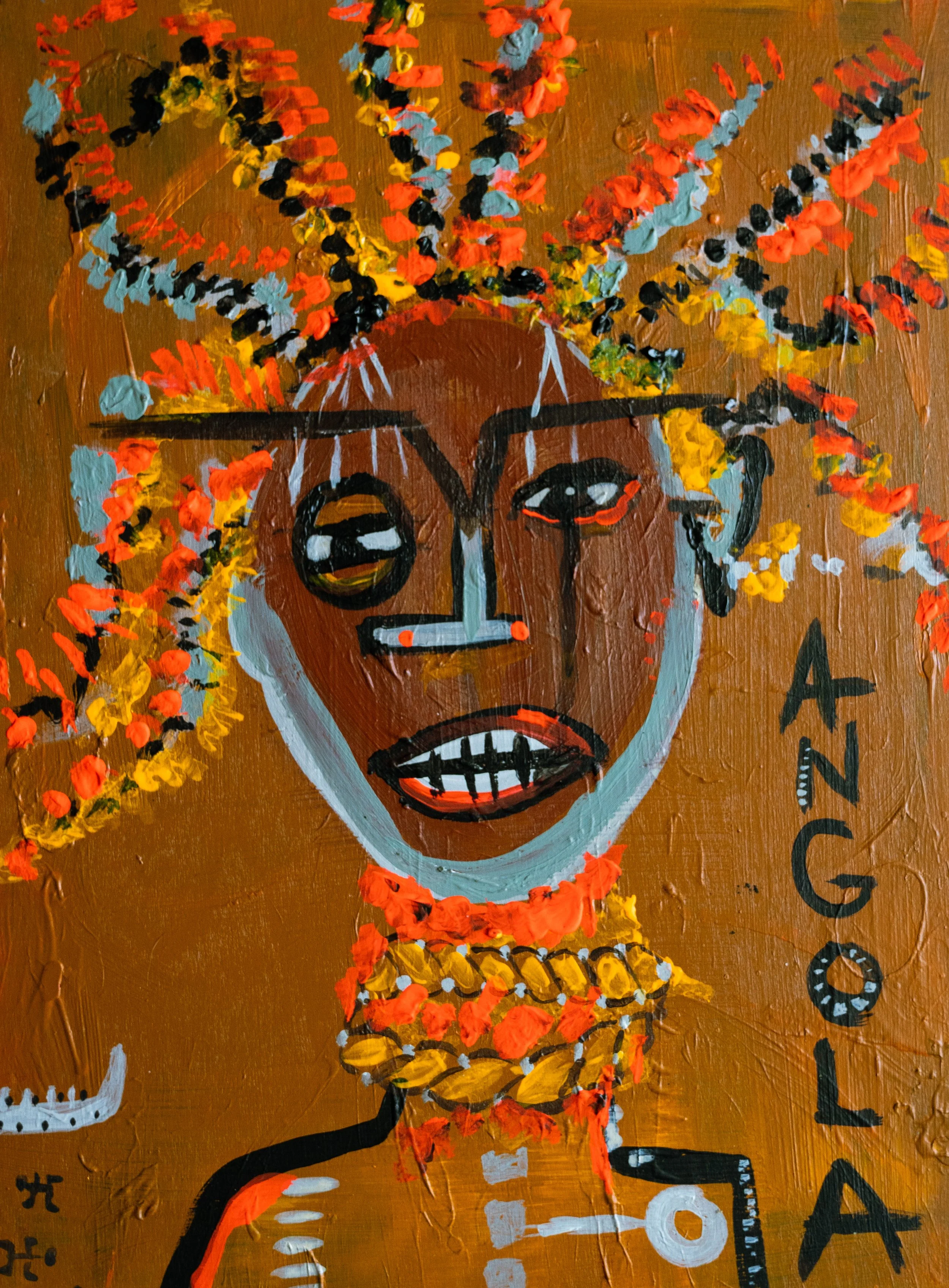
Tears of Angola
A woman weeps beneath a radiating headdress of orange and blue, with "ANGOLA" lettered down the canvas. The region was among the largest sources of captives in the transatlantic trade. Here that loss becomes portrait and lament. From the series The Rebirth of the Black Renaissance, LaRayia Gaston.
Sierra Leone
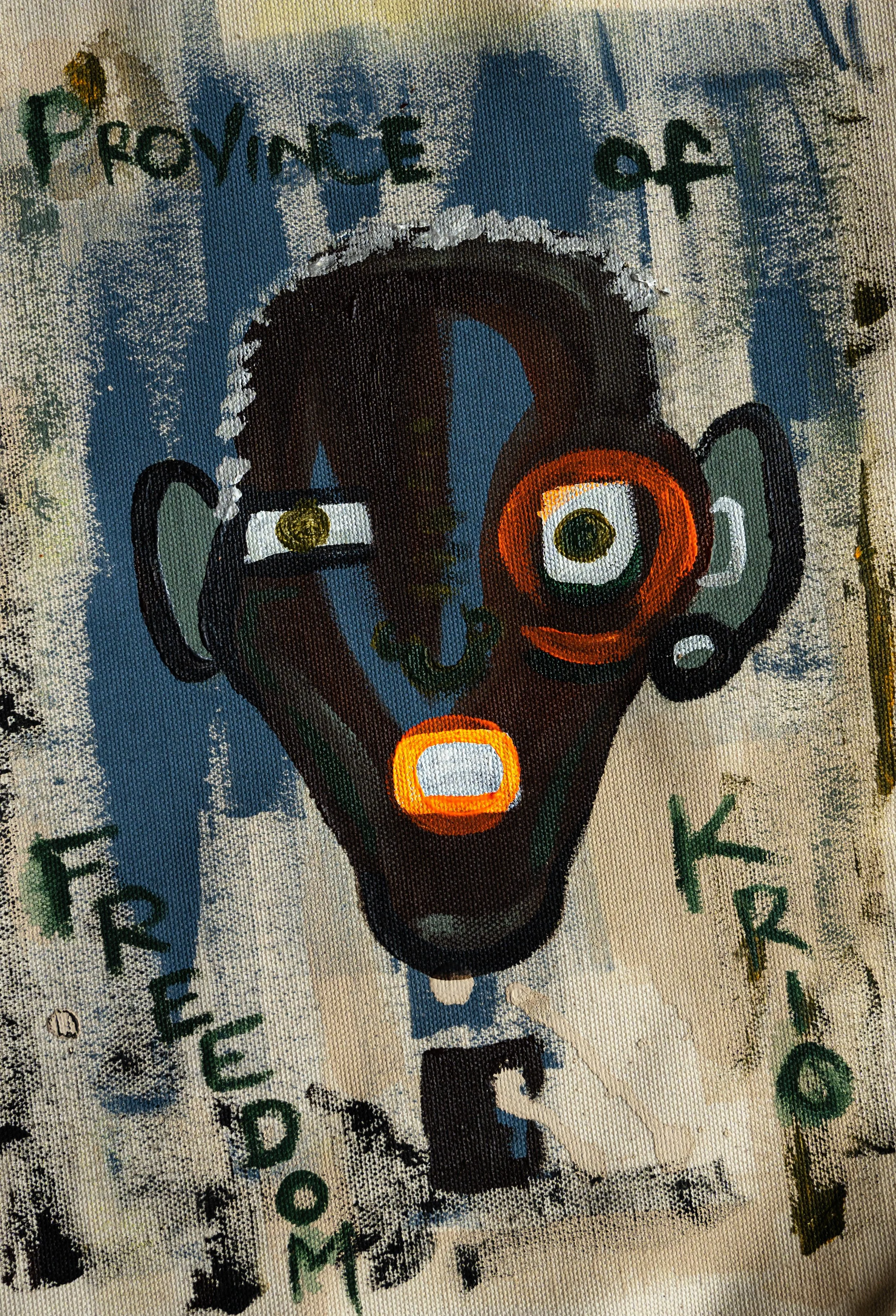
Lettered "Province of Freedom" and "Krio," the canvas recalls the 1787 settlement founded for formerly enslaved people and the Krio culture that grew from it. A split face, half shadowed and half lit, holds both the promise and the precarity of that freedom. From the series The Rebirth of the Black Renaissance, LaRayia Gaston.
Sons of Indigo (Small)
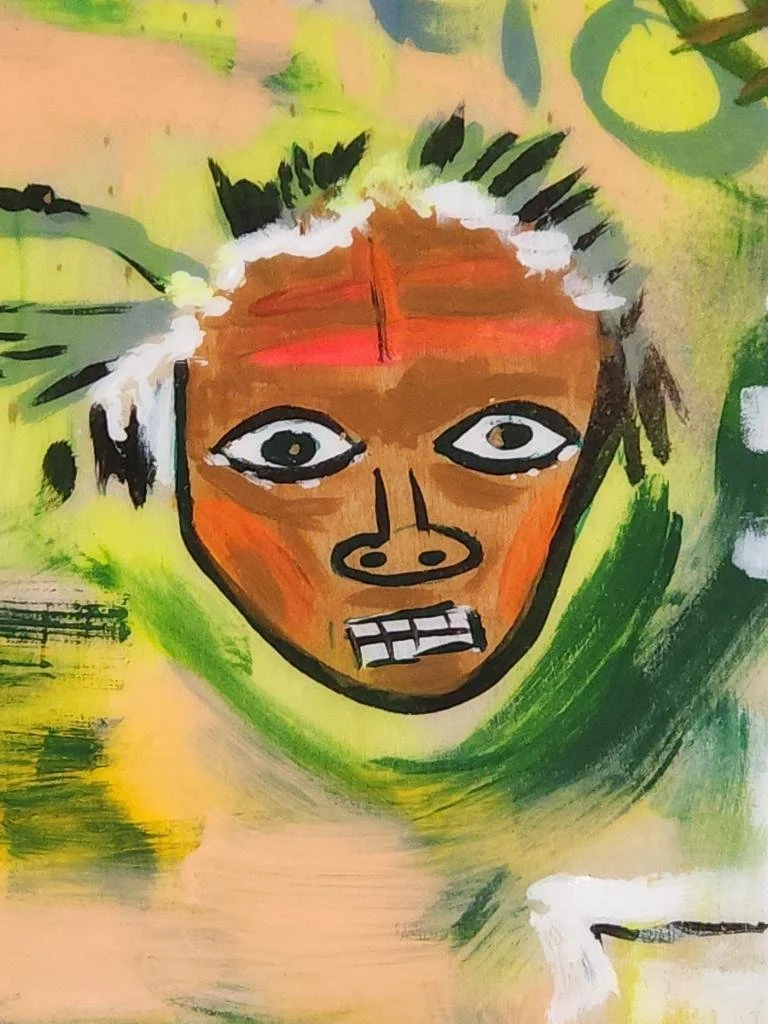
An intimate companion to Sons of Indigo, this study isolates one wide-eyed face, crowned in white, against swirling green. Where the larger work speaks as a crowd, this one speaks as a single gaze. From the series The Rebirth of the Black Renaissance, LaRayia Gaston.
Jim Crow is King
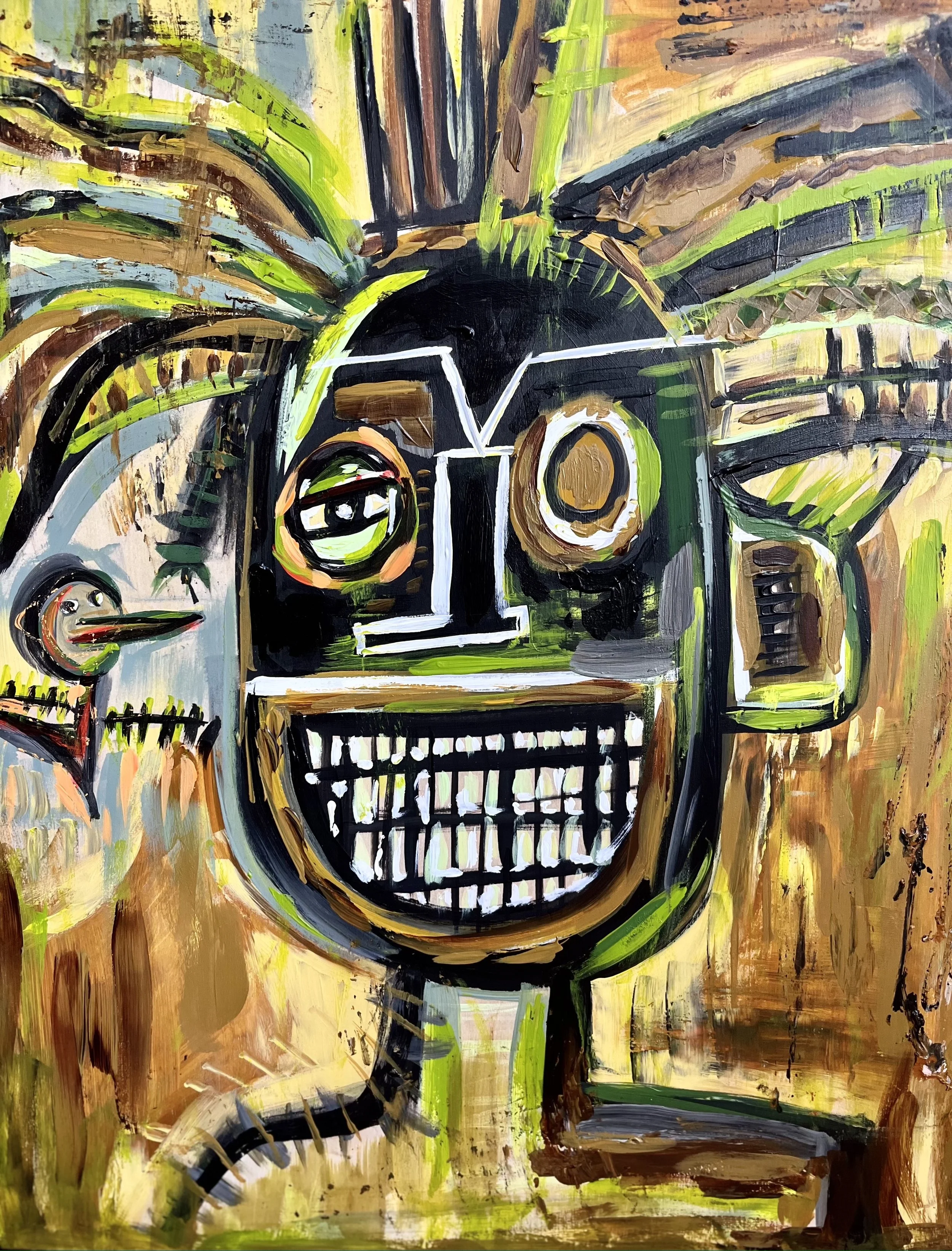
A skeletal, grinning mask rises from gold and brown. Its rigid grid of teeth recalls the minstrel caricature that gave Jim Crow its name. Crowned in spiked strokes, it is a portrait of the legal order that ruled by humiliation and fear. From the series The Rebirth of the Black Renaissance, LaRayia Gaston.
Crumbling
Built from blocks of orange, black and cream, a figure fragments even as it is assembled, its torso breaking away below the head. Color alone seems to hold it together. A study in what endures under pressure. From the series The Rebirth of the Black Renaissance, LaRayia Gaston.
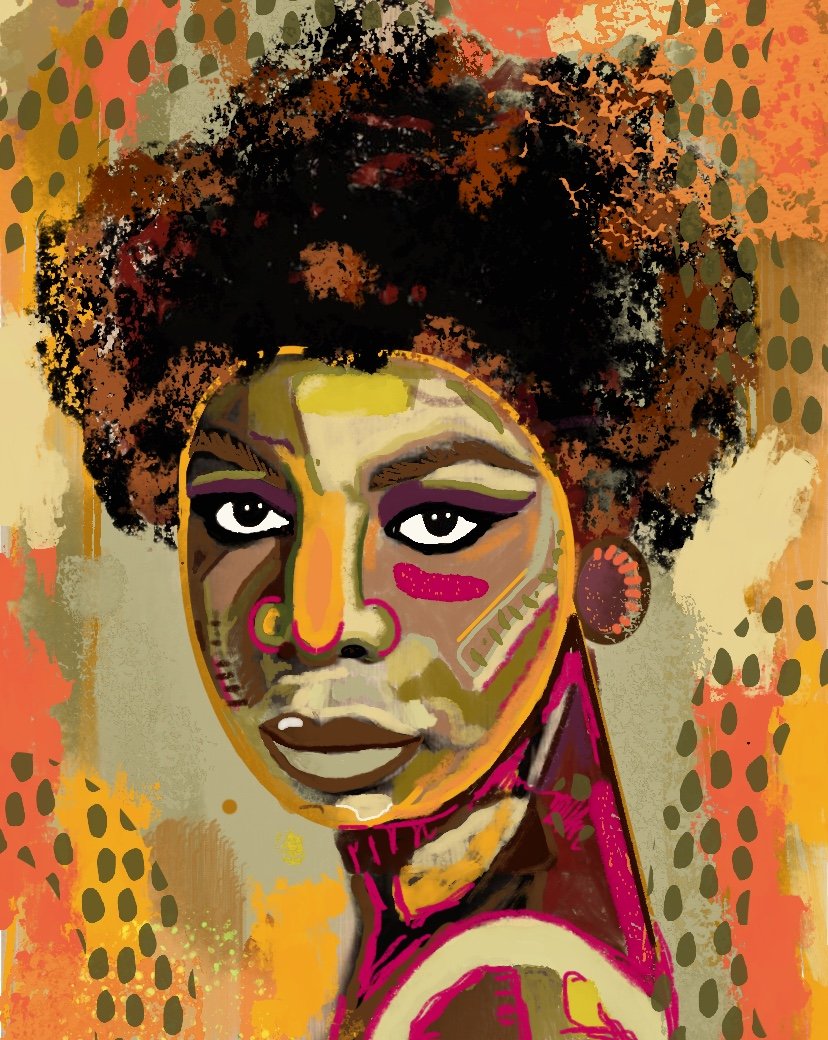
Lilac Wine
Titled after the song Nina Simone made her own. A young woman is crowned in a dense halo of curls, her face modeled in planes of ochre, plum and rose. Patterned dots and warm grounds give the work the hush of a ballad. From the series The Rebirth of the Black Renaissance, LaRayia Gaston.
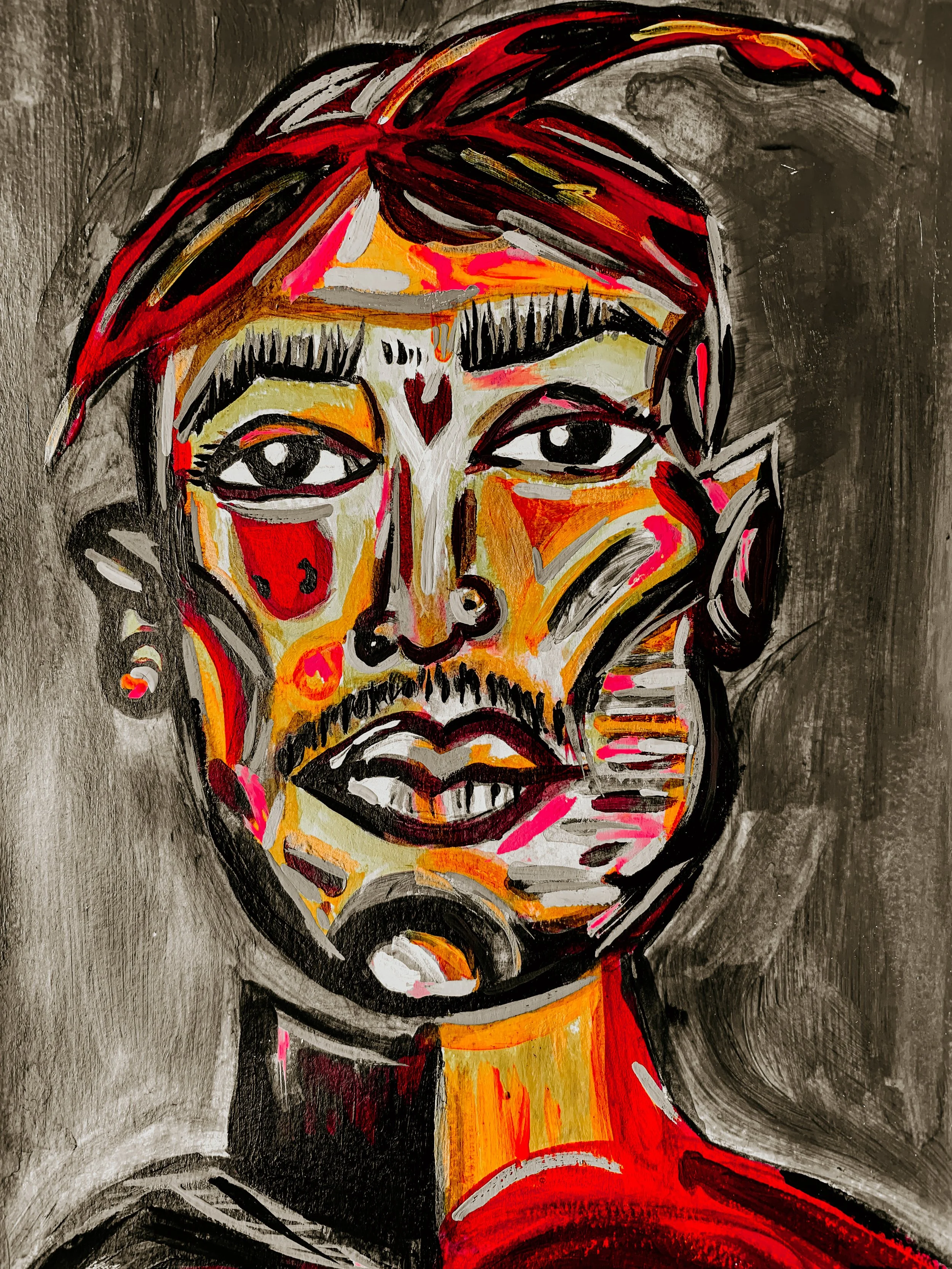
Ghetto Gospel
Painted in red, black and gold over a gray ground, a figure in a red bandana evokes Tupac Shakur, whose posthumous "Ghetto Gospel" gives the work its title. Gaston paints him as an icon of testimony, a voice that turned the street into scripture. From the series The Rebirth of the Black Renaissance, LaRayia Gaston.